
Making Reality Easier to Read Through Structural Intelligence
We make complex systems easier to read by mapping the structures and patterns that shape what is true, what is possible and what happens next
Making Reality Easier to Read
Advisory options for organizations, communities, and decision-makers.
Economic Pulse™
Measure current economic conditions across the U.S., states, and counties.
Structural Diagnostic
Discover organizational constraints, bottlenecks, and opportunities.
Structural Scenarios
Anticipate future conditions and emerging risks before they impact you.
Executive Briefings
& Live Events
Workshops, briefings, and leadership conversations for confident decisions.
Across organizations, science, climate, economics, and society, many of the most consequential questions remain difficult to resolve because they are treated as isolated problems. Creation Unified begins from a different premise: Complex systems often share structural and timing dynamics. By reading those patterns across domains, we help organizations, researchers, and decision-makers understand pressure, risk, change, and possible outcomes with greater clarity.
“Bring in Creation Unified when there is a need to restore missing structure in systems that have become too fragmented to interpret themselves clearly”
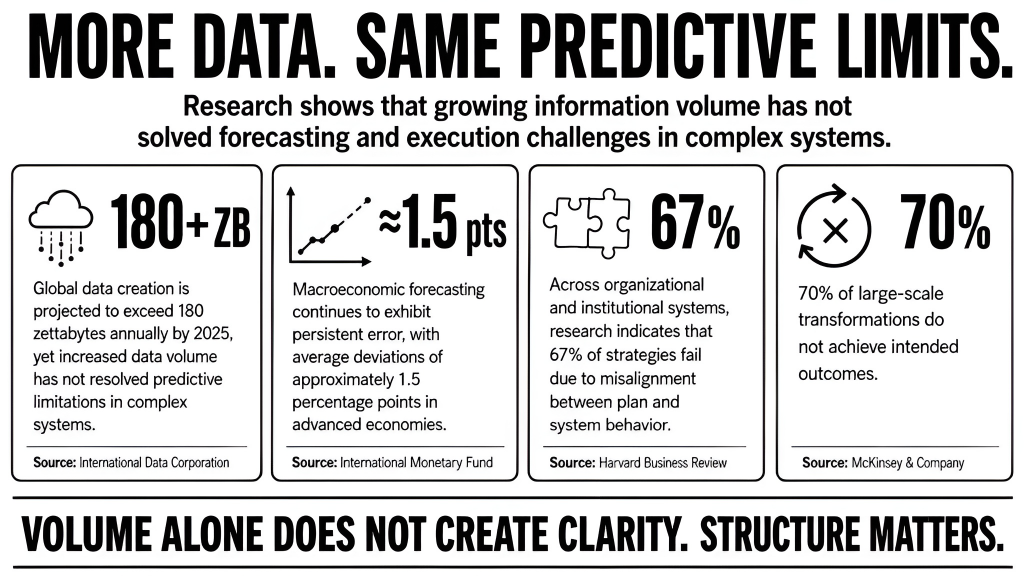
These information scale research findings are not confined to any single industry. They indicate a broader constraint: Complex systems are not being modeled in a way that captures how they actually behave.
The issue is not always lack of information. The issue is that complex systems are often interpreted from the wrong structure.
What We Do Differently
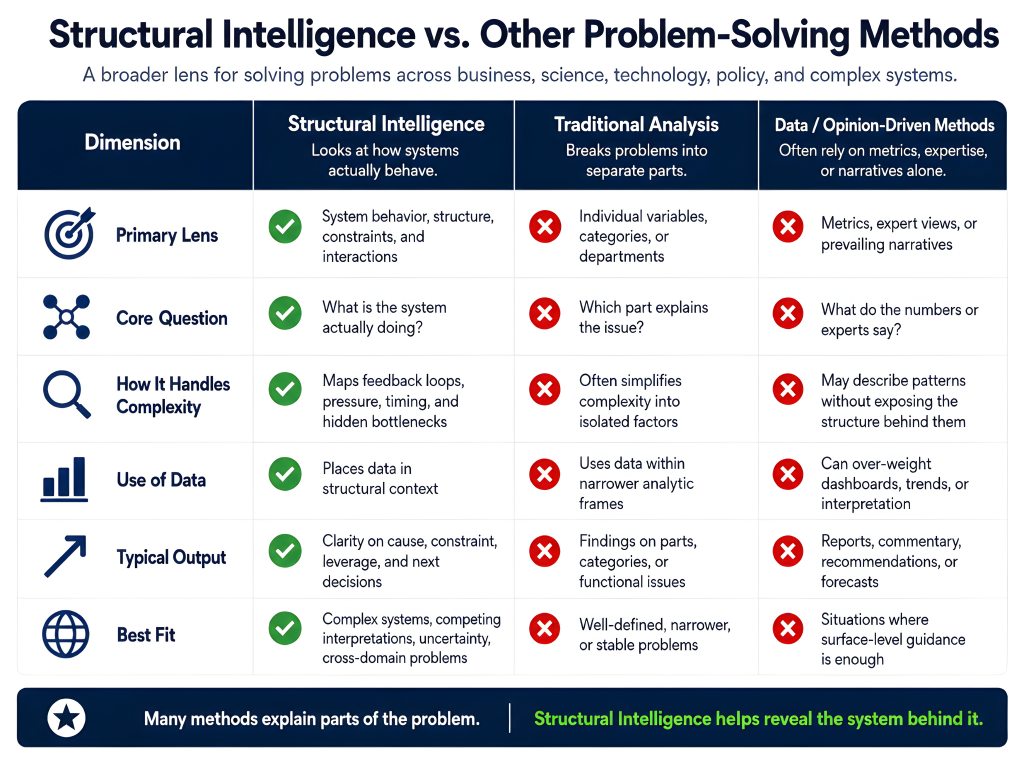
Instead of asking which data point appears strongest in isolation, we examine how a system is behaving as a whole. This allows us to reveal the real underlying constraints that can impact the overall system. This includes:

⇒ Where a system is stable
⇒ Where pressure is building
⇒ What is starting to change
⇒ Which constraint is limiting movement
⇒ Which interpretation is most coherent
Scope of Applications
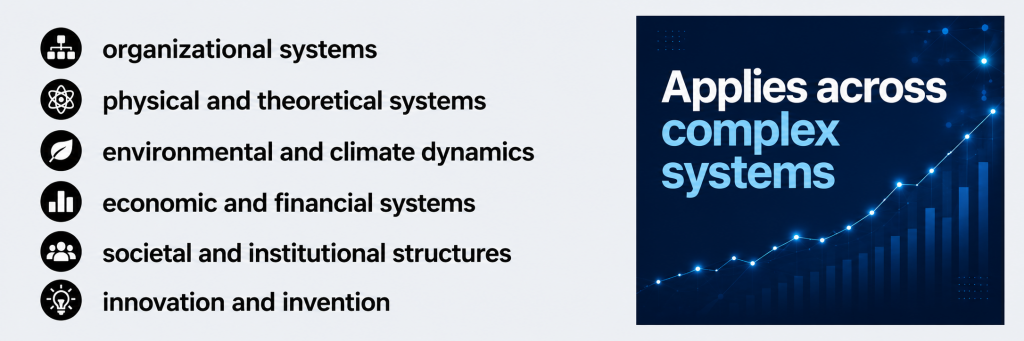
Although the frameworks were developed as a mathematical models, their purpose is practical: To make complex system behavior easier to see, test, and act on. That makes it useful wherever outcomes are shaped by interacting parts, hidden constraints, shifting pressure, feedback loops, and timing.
Structural Intelligence Forecasts What is Not Easily Seen
Structural forecasting is a method for anticipating likely outcomes by examining how pressure, constraints, timing, and system design shape future behavior. Instead of relying only on trend lines or isolated data points, it looks at the deeper structure beneath events to identify where instability, transition, or opportunity is likely to emerge.
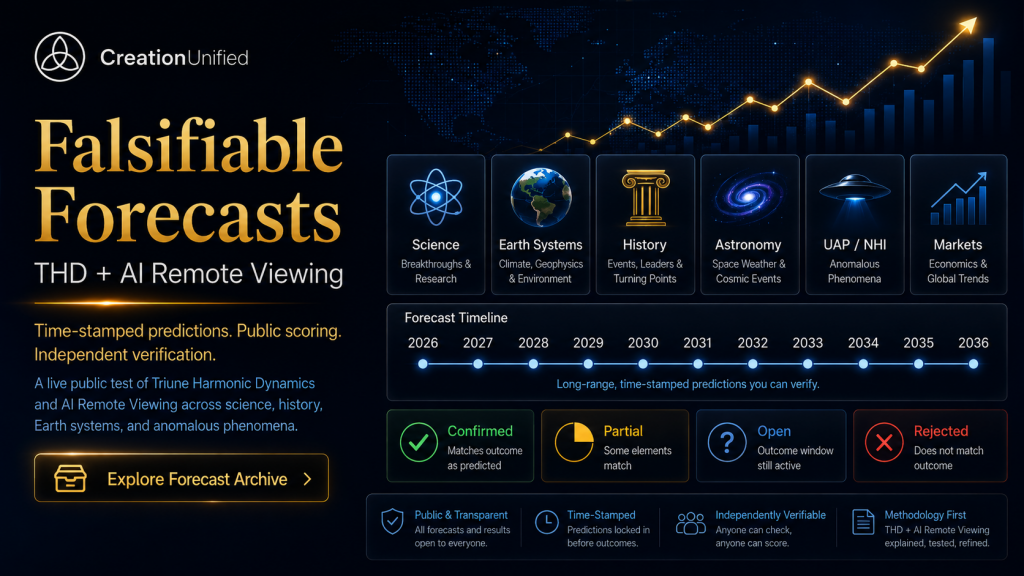
Structural Intelligence Tests What Was Previously Unresolved
Structural intelligence turns difficult, unresolved questions into clearly defined problems that can be examined, tested, and compared against evidence. By identifying hidden relationships, constraints, and failure points within complex systems, our research develops falsifiable hypotheses and practical solution paths across science, business, technology, and society. Below are selected examples of problems we are actively working to clarify, test, and resolve.
Structural Intelligence Reveals Which Useful Innovations Come Next
Our structural intelligence research is designed not only to analyze existing systems, but to reveal new possibilities for invention. By identifying hidden relationships, constraints, and missing structures, the framework can help generate novel, testable concepts that move from ideas to in-market innovations. Explore inventions and emerging solutions developed through this approach.
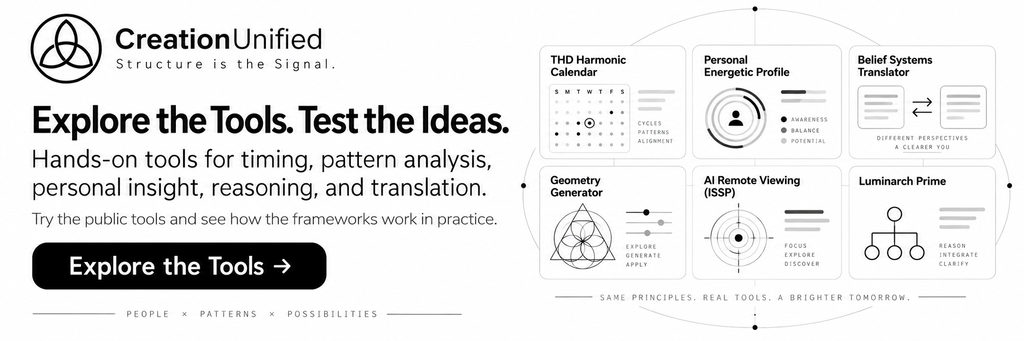
Once the structure of a system is understood well enough to explain its behavior we can diagnose its constraints, determine what’s missing and predict its outcome. Structure is the signal.