
Personalized mental conditioning
Self Talk Structural Protocol
Transform your internal dialogue. Strengthen your mindset. Practice meaningful change.
Use your Personal Energetic Profile and a ready-to-copy AI prompt to create five personalized, approximately 15-minute self-talk sessions for reading aloud or audio recording.
A structured approach to confidence, emotional resilience, assertiveness, consistent action, and healthy connection.
Jump to AI Prompt ↓Five interconnected capacities
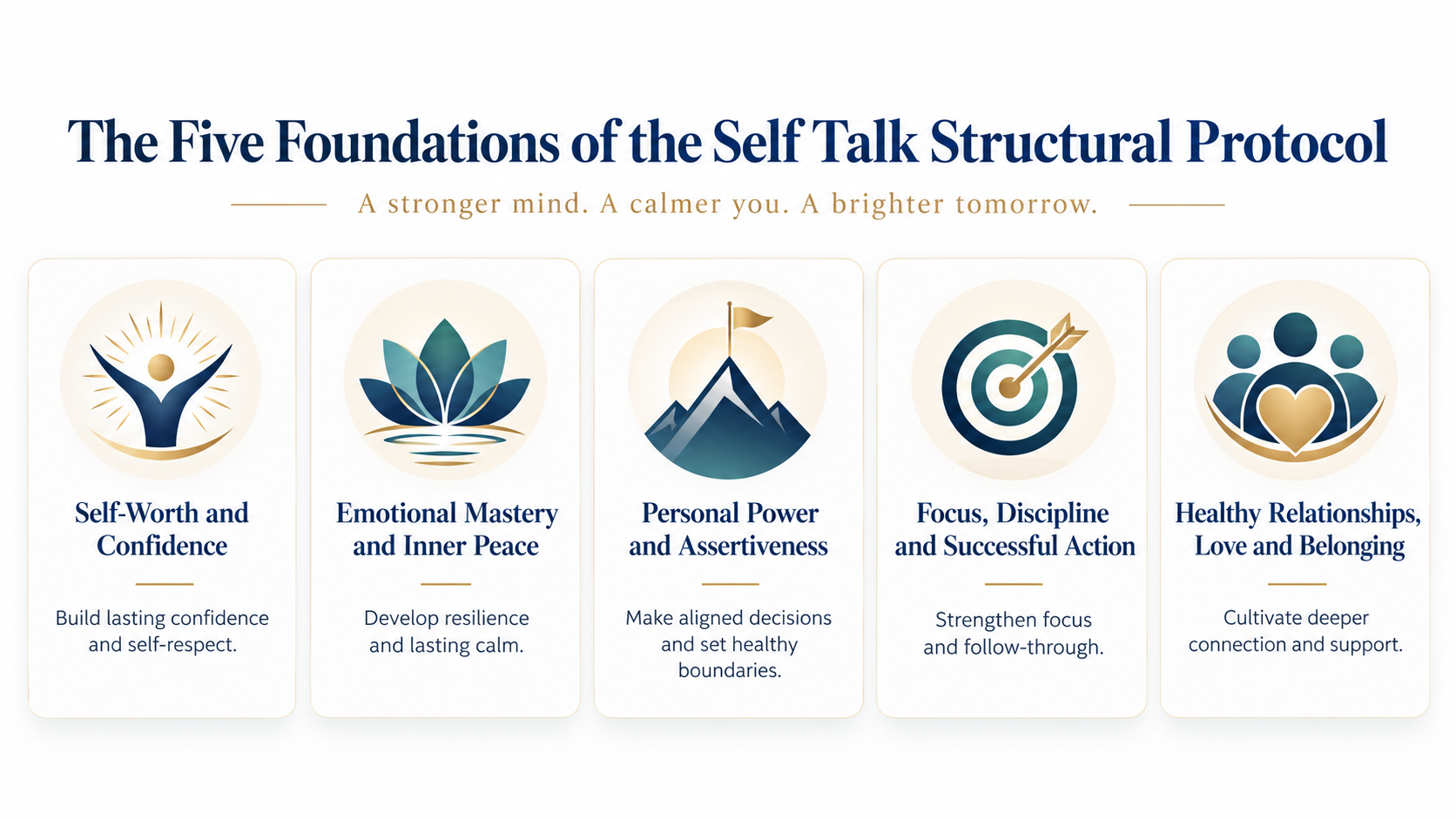
The Five Foundations
Every session focuses on one universal area of personal development. The same five foundations apply to everyone; the language and behavioral emphasis are customized to your profile.
The science behind the method
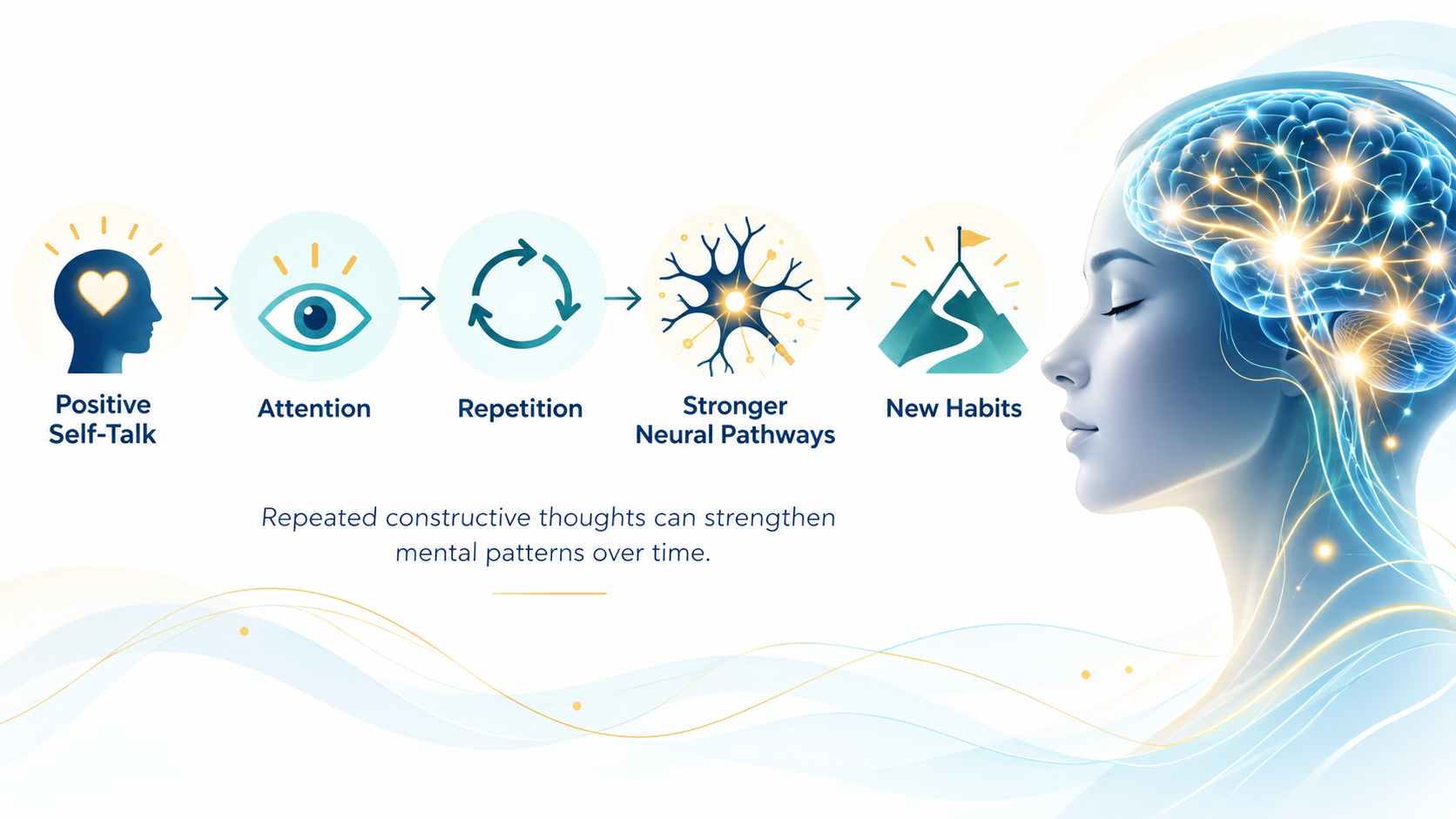
How Self-Talk Supports Learning
The brain can adapt through learning and experience, a capacity known as neuroplasticity. Repeated constructive self-instruction may help direct attention and encourage the behaviors you want to practice.
Words alone do not guarantee changes in neural pathways. The aim is to combine believable, positive statements with deliberate action and feedback.
Simple three-step workflow
From Your Profile to Five Personalized Sessions
Get your Personal Energetic Profile
Create or reopen your profile, then save the PDF for upload to your chosen AI.
Open Personal Energetic Profile ↗Copy the AI prompt
Copy the complete Self Talk Structural Protocol prompt from the window below.
Paste the prompt into any AI
Upload your profile, then paste the prompt into ChatGPT, Gemini, Claude, or another suitable AI to create five sessions for reading or audible recording.
Listen before you create
Hear Sample Self-Talk Sessions
Listen to examples of the positive, assertive language and narration style used in the Self Talk Structural Protocol. The recording gives you a sense of what personalized self-talk can sound like before you create your own five sessions.
Illustrative recordings. Your five scripts will be customized using your own Personal Energetic Profile.
AI Prompt for Your Personal Energetic Profile
Upload your profile to an AI service, copy the complete prompt, and paste it into the same conversation.

Self Talk Structural Protocol
The Five Foundations for Reconditioning the Mind Through Positive Self-Talk
Introduction: The Conversation That Shapes Our Lives
Every day, human beings engage in an ongoing internal conversation that influences how they understand themselves, interpret experiences, respond to challenges, and make decisions. Much of this conversation occurs automatically, without deliberate attention to the words or assumptions involved. We evaluate our abilities, anticipate how situations might unfold, interpret the behavior of others, and decide whether a particular opportunity is worth pursuing. Over time, these recurring thoughts can become familiar patterns that influence not only what we believe but also how we behave.
Consider how two people might respond to the same unfamiliar challenge. One approaches it with the expectation that difficulties are manageable and that unfamiliar skills can be learned through practice. The other anticipates embarrassment, assumes that mistakes will demonstrate personal inadequacy, and begins questioning whether the effort is worthwhile. Although both people face the same external circumstances, their internal interpretations may produce very different decisions and experiences.
These patterns are not necessarily fixed. Human beings continually learn from experience, and the ways we interpret situations can change through reflection, practice, feedback, and repeated behavior. Positive self-talk provides one way to participate deliberately in that process by replacing unhelpful habitual instructions with language that supports confidence, emotional balance, clear decisions, consistent action, and meaningful relationships.
The underlying principle is straightforward: the instructions we repeatedly give ourselves can influence the attitudes, expectations, and behaviors we practice. When those instructions become more constructive, they may support better choices across many areas of life.
People frequently seek greater confidence, financial security, motivation, emotional stability, improved relationships, career success, or personal fulfillment. Each objective has value, yet addressing them individually can produce a fragmented approach to personal development. Someone might work on financial confidence while continuing to struggle with personal boundaries, or concentrate on motivation while overlooking the emotional patterns that interfere with consistent action.
Structural research suggests that a more effective organizational approach is to identify the underlying psychological capacities that influence several areas of life simultaneously. Instead of creating an independent mental-conditioning program for every desired outcome, we can concentrate on a smaller group of foundational abilities that support a wide range of behaviors.
The Self Talk Structural Protocol proposes five such foundations: Unshakable Self-Worth and Confidence; Emotional Mastery and Inner Peace; Personal Power and Assertiveness; Focus, Discipline and Successful Action; and Healthy Relationships, Love and Belonging. These five topics address how we understand ourselves, manage our emotions, direct our choices, translate intentions into actions, and participate in relationships. Although they are presented separately for clarity, they operate as an interconnected system in which strengthening one capacity can support the development of others.
The purpose of this protocol is to use repeated, positive, assertive self-talk to reinforce these foundational capacities through mental rehearsal and practical application. Rather than simply encouraging people to think positively, it seeks to provide a consistent structure for developing more constructive internal instructions that can be practiced in everyday life.
How Self-Talk Influences Learning, Thinking, and Behavior
The human brain is capable of adapting throughout life. This capacity, commonly described as neuroplasticity, involves changes in the nervous system associated with experience, learning, and repeated activity. When we practice unfamiliar skills, establish new routines, or repeatedly respond to certain situations, learning processes can gradually influence which responses become familiar and accessible.
The popular expression rewiring the brain refers broadly to these kinds of changes, although it should not be interpreted as a claim that repeating a particular sentence automatically produces a specific or permanent neurological alteration. The brain’s response to experience is considerably more complex, involving attention, motivation, memory, emotion, behavior, and environmental feedback.
Self-talk participates in learning because language helps organize our interpretation of events and our expectations about what comes next. A person who repeatedly tells themselves that a task is impossible may approach it with hesitation, devote greater attention to evidence of difficulty, and abandon the effort sooner than someone who expects improvement through preparation and practice. Conversely, constructive internal instructions can direct attention toward useful actions and encourage persistence when circumstances become challenging.
Albert Bandura’s research on self-efficacy provides an important foundation for understanding this relationship. Self-efficacy refers to a person’s belief in their ability to perform the actions required in a particular situation. Bandura proposed that these beliefs influence whether individuals initiate challenging activities, how much effort they invest, and how they respond to obstacles. Importantly, self-efficacy is not simply a matter of feeling good about oneself; it concerns expectations about the ability to act effectively.
This distinction helps explain why useful self-talk should emphasize specific capabilities and behaviors rather than relying exclusively on broad declarations of personal greatness. A statement such as “I prepare carefully, communicate clearly, and improve through experience” directs attention toward actions that can be practiced. By contrast, claiming to possess unlimited ability may provide little practical guidance and may conflict with what the listener believes about their actual circumstances.
Research has examined self-talk interventions directly. A 2011 meta-analysis by Antonis Hatzigeorgiadis and colleagues found that structured self-talk interventions produced a moderate positive effect on sports performance across the studies examined. Although the findings do not establish that every type of self-talk is effective in every setting, they support the broader conclusion that deliberately rehearsed verbal instructions can influence performance under appropriate conditions.
Other investigations suggest that the perspective used during self-talk can matter. In a 2014 study, Ethan Kross and colleagues examined how people regulate responses to stressful experiences when referring to themselves using their own names or non-first-person language. Their findings suggested that this linguistic shift can help create psychological distance and support more constructive self-reflection.
These results provide a useful rationale for combining first-person and second-person statements in personalized recordings. First-person language, such as “I make confident decisions,” encourages personal ownership of the behavior being developed. Second-person language, such as “You make confident decisions,” can resemble supportive external coaching and may help the listener consider the same behavior from a slightly different perspective. These are complementary approaches, although their relative effectiveness may vary among individuals.
Shad Helmstetter’s work on self-talk offers a practical model for using repetition as part of personal development. Through his books and the Self-Talk Plus system, Helmstetter emphasizes listening to repeated, positive statements that describe desired attitudes, habits, and responses. Rather than treating affirmations as occasional motivational reminders, this approach makes constructive language a recurring part of the listener’s experience.
The distinction between ordinary encouragement and structured mental conditioning is important. An inspirational statement may briefly improve someone’s mood without providing a clear behavioral direction. A well-designed self-talk program repeatedly rehearses specific choices, attitudes, and responses that the listener can practice when relevant situations arise.
Nevertheless, repetition alone does not guarantee improvement. Research by Joanne Wood and colleagues found that repeating extremely positive self-statements could sometimes worsen feelings among participants with low self-esteem, particularly when the statements sharply contradicted their existing self-beliefs. This finding suggests that an effective program should combine confidence with credibility, emphasizing believable capabilities, gradual development, and behavior within the listener’s influence.
The Self Talk Structural Protocol therefore uses positive language as a method of directing attention and rehearsing constructive responses, not as a way of denying difficulties or pretending that desired outcomes have already occurred. Its objective is to support learning through a combination of repeated instructions, practical action, and feedback from experience.
| Situation | Unhelpful internal pattern | Constructive self-talk |
|---|---|---|
| Facing an unfamiliar challenge | Expecting failure before beginning | “I learn through preparation and experience.” |
| Experiencing emotional pressure | Reacting automatically to distress | “I recognize my feelings and respond thoughtfully.” |
| Making a difficult decision | Delaying action because of uncertainty | “I consider the information and make a clear choice.” |
| Beginning an important task | Waiting for ideal motivation | “I begin with one useful step and maintain steady progress.” |
| Entering a social situation | Assuming rejection or disapproval | “I communicate openly and welcome meaningful connection.” |
The constructive statements are not guarantees of success. They are mental instructions that emphasize behaviors and interpretations likely to be more useful than avoidance, automatic defensiveness, or unnecessary self-criticism.
Why These Five Foundations Matter Most
The five foundations were selected through structural analysis of the psychological functions involved in everyday decisions, emotional experiences, personal development, and social participation. The objective was to identify broad capacities that influence many other behaviors rather than to compile a list of popular self-improvement goals.
For example, improved financial management may depend on confidence in making decisions, emotional regulation when facing uncertainty, the assertiveness required to negotiate or establish boundaries, the discipline needed to follow a plan, and the relationships through which opportunities and support develop. Similarly, career advancement may involve the same underlying capacities, even though the external objective is entirely different.
By strengthening broad psychological functions, an individual may develop abilities that transfer into several areas of life. This is the central advantage of organizing mental conditioning around foundational capabilities rather than narrowly defined outcomes.
| Foundation | Central psychological function | Broader areas it may support |
|---|---|---|
| Self-Worth and Confidence | Constructive beliefs about personal value and capability | Learning, initiative, resilience, opportunity-seeking |
| Emotional Mastery and Inner Peace | Recognizing emotions and regulating responses | Stress management, decision-making, health-related habits |
| Personal Power and Assertiveness | Directing choices and communicating boundaries | Leadership, independence, conflict resolution, negotiation |
| Focus, Discipline and Successful Action | Translating intentions into consistent behavior | Productivity, learning, health routines, goal achievement |
| Healthy Relationships, Love and Belonging | Building meaningful reciprocal connections | Companionship, cooperation, social support, personal fulfillment |
These capacities are interconnected rather than independent. Greater confidence may help someone communicate assertively, while improved emotional regulation can make that communication more constructive. Disciplined behavior may produce experiences that strengthen self-efficacy, and supportive relationships may provide encouragement that sustains effort through difficult periods.
The proposed sequence of Identity → Emotional Regulation → Personal Agency → Consistent Action → Healthy Connection is therefore best understood as an instructional framework, not a claim that the brain must develop these capacities in a fixed biological order.
Its practical value is that it provides a coherent way to organize personal development while accounting for the relationships among major psychological functions. There are many important influences on well-being that extend beyond these five categories, including physical health, environmental conditions, economic circumstances, cultural experiences, and access to appropriate care. The protocol does not claim to replace those factors or reduce all human difficulties to five psychological variables. Instead, it proposes that these five areas offer a broad foundation for voluntary mental-conditioning practice.
Foundation One: Unshakable Self-Worth and Confidence
The first foundation concerns the relationship people develop with themselves. Self-worth reflects the value individuals assign to themselves as human beings, while confidence describes their expectations about being able to respond effectively to particular situations. These concepts influence one another, but they are not interchangeable. Someone may possess substantial professional knowledge while struggling with feelings of personal inadequacy, just as another individual may maintain healthy self-respect while acknowledging that certain skills require additional development.
Both capacities matter because people continually interpret experiences through their existing beliefs about themselves. When a person views mistakes as evidence of permanent inadequacy, even ordinary setbacks can reinforce hesitation and avoidance. When the same person learns to regard errors as information about a strategy, skill, or assumption that needs improvement, those experiences can become opportunities for learning rather than threats to personal identity.
Self-worth provides the stable foundation for this healthier interpretation by separating a person’s inherent value from temporary success or failure. Confidence builds upon that foundation by encouraging the expectation that preparation, practice, and experience can improve future performance. Together, these capacities influence the willingness to pursue opportunities, ask questions, communicate ideas, and recover from disappointment.
Bandura’s research on self-efficacy is particularly relevant because it demonstrates that beliefs about capability are connected to effort, persistence, and willingness to engage with challenging tasks. People who expect that their actions can produce meaningful results are generally more willing to undertake activities that require sustained effort, while individuals who doubt their capabilities may avoid opportunities before they have gathered enough experience to make an accurate judgment.
The purpose of positive self-talk in this area is to develop a constructive internal identity grounded in personal respect, realistic capability, and continued growth. Statements should reinforce confidence without requiring exaggerated beliefs about perfection or superiority. An effective recording might repeatedly emphasize the listener’s willingness to learn, their ability to make thoughtful decisions, their comfort with new experiences, and their capacity to improve through practice.
A particularly important distinction concerns the difference between encouraging confidence and demanding certainty. Healthy confidence does not require someone to believe that every decision will be correct or that every challenge will be overcome immediately. Instead, it supports the expectation that difficulties can be approached intelligently and that uncertainty does not eliminate the possibility of useful action.
This approach is consistent with broader research on self-affirmation. Geoffrey Cohen and David Sherman’s review of self-affirmation interventions describes how reflecting on important personal values can reduce defensive responses to threatening information and, in certain circumstances, improve behavior. Although values-based self-affirmation differs from repetitive positive self-talk, the findings highlight the importance of connecting internal language to credible aspects of personal identity.
For practical conditioning, statements might emphasize that the listener respects themselves, trusts their developing judgment, approaches challenges with curiosity, and recognizes improvement through experience. Repetition reinforces these themes, while everyday actions provide opportunities to determine whether the emerging beliefs are influencing behavior.
Improvement may become visible when an individual pursues an opportunity that previously felt intimidating, contributes an idea during a discussion, accepts constructive criticism without excessive self-judgment, or attempts an unfamiliar activity with a more balanced attitude. These experiences can create a reinforcing relationship between constructive internal language and genuine evidence of developing capability.
Self-worth and confidence are placed first in the protocol because they influence how individuals approach the remaining foundations. A person who believes they deserve respect may find it easier to establish boundaries, while someone who trusts their capacity to learn may become more willing to practice emotional regulation, develop consistent habits, or initiate meaningful relationships.
The objective is not to create an inflated self-image, but to establish a dependable internal relationship in which personal value remains stable and capability is understood as something that can continue developing throughout life.
Foundation Two: Emotional Mastery and Inner Peace
Emotional experiences play an essential role in human life by providing information about needs, expectations, perceived threats, relationships, and personal values. Fear may draw attention to possible danger, frustration may indicate that an important goal has been obstructed, and sadness may accompany loss or disappointment. These experiences are not inherently undesirable; they become difficult when emotional reactions repeatedly interfere with clear thinking, constructive behavior, or the ability to recover after stressful events.
Emotional mastery is therefore not the elimination of difficult feelings. It is the development of greater awareness, flexibility, and choice in how those feelings are understood and expressed. Someone who experiences anger during a disagreement may still choose to communicate respectfully, just as a person who feels anxious before an important presentation may continue preparing and participate effectively despite the discomfort.
This capacity matters because many everyday decisions occur under emotional pressure. A critical message, unexpected expense, disagreement, or uncertain outcome may generate an immediate reaction that encourages withdrawal, defensiveness, excessive worry, or impulsive action. Without sufficient awareness, the individual may respond primarily to the intensity of the emotion rather than to the information available.
Emotional regulation creates room for a more deliberate process. The person can recognize the feeling, examine the circumstances, consider alternative interpretations, and choose a response that serves their longer-term interests. This does not always happen immediately, nor does it require emotional discomfort to disappear before constructive behavior becomes possible.
Research on emotion regulation provides support for this approach. A meta-analysis by Thomas Webb, Eleanor Miles, and Paschal Sheeran examined experimental studies of strategies for managing emotional responses and found that different approaches produced different effects. Among the useful strategies were methods involving changes in how situations were interpreted, often described as cognitive reappraisal.
Self-talk can support this process by providing rehearsed language that encourages thoughtful interpretation and deliberate response. Instead of relying entirely on whatever internal reaction appears first, individuals can practice instructions emphasizing patience, perspective, emotional awareness, and the ability to return to useful action.
For example, someone facing a difficult conversation might repeatedly rehearse the expectation that they can listen carefully, understand the other person’s position, express themselves clearly, and remain respectful even when disagreement continues. The objective is not to guarantee emotional calm, but to strengthen a response pattern that becomes more accessible through practice.
A related component is resilience, which concerns adapting to challenges and recovering after disruption. People often imagine resilience as the ability to remain unaffected by adversity, yet a more realistic understanding recognizes that difficult experiences may produce genuine distress while individuals gradually regain their capacity to function.
A self-talk program focused on emotional mastery should therefore reinforce both constructive responses during challenging situations and the ability to recover afterward. Statements can emphasize recognizing emotions, allowing time for reflection, using appropriate support, restoring perspective, and returning to meaningful activities when ready.
Recovery is particularly important because emotional regulation involves more than what happens during the initial event. Some people continue mentally reviewing a difficult interaction long after it has ended, repeatedly imagining alternative outcomes or anticipating future problems. Constructive internal language may help redirect attention toward what can reasonably be addressed and what can be allowed to settle.
Practical recovery may also involve rest, movement, reduced stimulation, supportive conversation, and adequate sleep. Positive self-talk should encourage these realistic behaviors rather than suggesting that words alone can replace the body’s need for recovery.
The broader value of emotional mastery becomes apparent through its influence on the remaining foundations. Emotional regulation can support better decisions, more consistent attention, and healthier relationships, while the ability to recover from setbacks can help individuals maintain confidence and continue pursuing meaningful goals.
The intended result is a person who recognizes emotions as part of ordinary experience while developing greater confidence in their ability to respond thoughtfully, preserve perspective, and restore balance when circumstances become difficult.
Foundation Three: Personal Power and Assertiveness
Personal agency concerns the ability to participate actively in directing one’s own behavior. It involves recognizing available choices, making decisions, communicating preferences, accepting responsibility, and taking action within the circumstances a person can influence. Assertiveness is one of the most practical expressions of this capacity because it allows individuals to communicate their needs and boundaries while respecting the rights and independence of others.
A person may possess substantial knowledge and healthy self-confidence yet still hesitate to express a preference, decline an unsuitable obligation, request assistance, or disagree with someone whose opinion matters to them. These situations illustrate why confidence alone is not sufficient for effective personal agency. Individuals also need the ability to translate their understanding and preferences into clear communication and deliberate choices.
Assertiveness differs from both passivity and aggression. Passive behavior often involves withholding preferences or surrendering decisions to avoid discomfort, while aggressive behavior may disregard the legitimate needs and rights of others. Assertive communication seeks a more balanced relationship in which a person can express their position directly without unnecessarily threatening or controlling someone else.
Healthy boundaries are central to this process because they clarify the difference between personal responsibility and the responsibilities belonging to other people. Without clear boundaries, individuals may repeatedly accept commitments they cannot sustain, remain involved in situations beyond their appropriate role, or develop resentment when expectations are misunderstood.
Positive self-talk can support assertiveness by reinforcing the expectation that clear communication is appropriate, personal needs deserve consideration, and decisions can be expressed respectfully. Rather than repeatedly describing fears of conflict or rejection, a conditioning session should rehearse the desired alternative: confident choices, direct communication, appropriate limits, and responsibility for personal actions.
The strongest statements connect confidence with behavior. A person might practice internal instructions emphasizing that they evaluate requests thoughtfully, communicate available time, make clear agreements, and express decisions with composure. These are skills that can be practiced in ordinary conversations and strengthened through experience.
Agency must also be understood realistically. Personal power does not mean controlling every circumstance or guaranteeing that others will respond as desired. Economic conditions, organizational decisions, relationship dynamics, and many external events remain partly or entirely outside individual control. Assertive self-talk is most useful when it concentrates attention on the choices and actions genuinely available.
Someone seeking career advancement, for example, cannot guarantee an employer’s decision, but may choose to develop skills, request feedback, communicate accomplishments, or explore alternative opportunities. Similarly, a person cannot determine whether another individual accepts an invitation, but can choose to extend that invitation confidently and respectfully.
These examples demonstrate how agency operates within real constraints. The objective is to strengthen useful participation rather than encourage unrealistic expectations of unlimited control.
This foundation also has a direct relationship with emotional regulation because maintaining a boundary can sometimes produce discomfort, disagreement, or disappointment. An individual who has practiced responding calmly to emotional pressure may find it easier to communicate a decision without becoming defensive or abandoning a reasonable limit.
Assertiveness can also improve relationships by making expectations clearer. When people communicate needs and responsibilities openly, misunderstandings become easier to identify, and cooperation can develop around realistic agreements rather than unspoken assumptions.
Progress may appear when someone expresses a preference without excessive explanation, declines an unsuitable commitment, initiates an important conversation, asks for assistance, negotiates an agreement, or makes a decision with less unnecessary delay. These behaviors are observable and provide opportunities for the listener to recognize the practical benefits of stronger agency.
The role of self-talk is to make these constructive responses increasingly familiar. Through repeated rehearsal and real-world application, personal power becomes associated with thoughtful decisions, clear communication, and respect for both personal autonomy and the autonomy of others.
Foundation Four: Focus, Discipline and Successful Action
The first three foundations support confidence, emotional stability, and the ability to direct personal choices, but meaningful results usually require another essential capability: translating intentions into consistent behavior. Many people understand what they want to accomplish and believe that the objective is worthwhile, yet struggle to begin, sustain attention, follow through after interruptions, or complete work when immediate motivation declines.
Focus and discipline address this gap between intention and execution. Focus allows a person to direct attention toward relevant information and activities, while discipline supports repeated engagement with behaviors that contribute to a chosen objective. Together, they help transform personal aspirations into actions that can produce measurable progress.
Motivation can be valuable, particularly when beginning an unfamiliar activity, but it naturally changes with circumstances. Enthusiasm may decrease when a project becomes repetitive, results take longer than expected, or competing demands capture attention. A person whose progress depends entirely on feeling motivated may therefore struggle to maintain consistency across ordinary fluctuations in mood and energy.
Disciplined action provides a more stable alternative by establishing routines, defining manageable objectives, and making the next useful step easier to identify. Self-talk can reinforce these behaviors through direct instructions that emphasize beginning promptly, maintaining attention, completing useful stages, and returning to a task after interruption.
Research on implementation intentions is especially relevant. Peter Gollwitzer and Paschal Sheeran reviewed studies examining plans that connect a recognizable situation with a specific action. Their findings indicate that these plans can improve goal attainment by making the intended response more accessible when the relevant situation occurs.
For example, a person who wants to develop a regular writing practice may decide that after breakfast they will devote a particular period to drafting. This is more concrete than simply hoping to write more often, because the planned situation and behavior have already been linked.
Self-talk can reinforce similar patterns by repeatedly rehearsing the relationship between intention and action. A recording might emphasize that the listener begins important work at the chosen time, concentrates on one meaningful step, recognizes completed stages, and resumes after interruptions with confidence.
The effectiveness of these statements depends partly on their connection to actual behavior. Repeating that one is disciplined may provide some encouragement, but consistently beginning a planned task offers practical experience that can strengthen the belief. This creates a potentially beneficial cycle in which constructive internal language supports action, successful action provides evidence of capability, and that evidence contributes to stronger self-efficacy.
A useful program must also distinguish discipline from unnecessary overwork. Constant activity is not automatically productive, and individuals who repeatedly exceed their physical or mental capacity may undermine the consistency they are attempting to develop. Sustainable discipline involves selecting priorities, recognizing limits, maintaining appropriate recovery, and directing effort toward work that genuinely matters.
This distinction is especially important when goals require sustained attention over months or years. Long-term progress depends on the ability to adjust routines, learn from feedback, and preserve enough energy to continue.
The protocol therefore emphasizes practical consistency rather than perfection. When an interruption occurs, the useful response is to recognize what happened, identify the next appropriate step, and resume without converting an ordinary disruption into a judgment about personal identity.
Focus and discipline also influence areas that may not initially appear related to productivity. Reliable attention helps people maintain relationships, follow health-related routines, complete educational programs, meet commitments, and create predictable conditions for personal stability.
The desired outcome is a person who can choose meaningful objectives, organize practical steps, sustain effort, respond to feedback, and recognize completion without becoming dependent on constant excitement or external pressure.
Self-talk strengthens this foundation by rehearsing the behaviors associated with successful action until those instructions become familiar components of the person’s ordinary approach to work and responsibility.
Foundation Five: Healthy Relationships, Love and Belonging
Human development takes place within a social environment. From childhood through adulthood, people form relationships that influence their expectations, emotional experiences, opportunities, and understanding of themselves. Family members, friends, partners, colleagues, and communities provide forms of connection, cooperation, recognition, and support that cannot be fully replaced by individual achievement.
The importance of belonging has substantial support in psychological research. Roy Baumeister and Mark Leary proposed that forming and maintaining meaningful interpersonal attachments represents a fundamental human motivation, drawing on evidence connecting social relationships with emotional experiences, behavior, and well-being.
Research has also identified associations between social connection and physical health. A 2010 meta-analysis by Julianne Holt-Lunstad and colleagues examined 148 studies involving more than 300,000 participants and found that stronger social relationships were associated with a higher likelihood of survival during the follow-up periods studied. Although this evidence does not demonstrate that positive self-talk produces those outcomes, it underscores the broader importance of relationships in human well-being.
Healthy connection requires more than simply spending time around other people. Meaningful relationships generally involve communication, respect, appropriate trust, shared experiences, reciprocity, and the ability to recognize both personal needs and the needs of others. Individuals may struggle with these capacities for different reasons, including fear of rejection, discomfort with vulnerability, difficulty setting boundaries, or expectations formed through earlier experiences.
Internal language can influence how these situations are approached. Someone who repeatedly anticipates rejection may hesitate to initiate contact, while an individual who believes that asking for support demonstrates weakness may struggle to participate in reciprocal relationships. Others may approach connection primarily through what they can provide, developing a pattern in which their value becomes tied to being useful or needed.
Constructive self-talk can help direct attention toward healthier alternatives by reinforcing comfort with connection, confident communication, mutual appreciation, and the ability to give and receive support.
A personalized recording might emphasize the listener’s willingness to initiate conversations, express genuine interest, share personal experiences, receive kindness, and maintain relationships in which responsibilities are balanced. The purpose is to rehearse openness and reciprocity rather than promise that every interaction will be successful.
This distinction matters because relationships always involve other people whose choices and preferences remain independent. A person can control their willingness to communicate honestly and behave respectfully, but cannot guarantee another person’s affection, agreement, or continued participation.
Healthy relational confidence allows space for this uncertainty. The individual can initiate connection without demanding a particular response and can recognize when a relationship offers genuine mutual benefit.
Assertiveness contributes directly to this foundation because meaningful relationships require boundaries as well as openness. People who communicate preferences and expectations clearly are better positioned to develop agreements that respect both individuals. Emotional regulation also supports connection by helping people respond thoughtfully during disagreements and maintain perspective when relationships become complicated.
Self-worth provides another important contribution. Individuals who recognize their own value may find it easier to seek relationships grounded in mutual respect rather than treating external approval as the sole measure of personal worth.
Practical improvement may appear through simple actions such as inviting someone to share an activity, maintaining contact with a friend, expressing appreciation, asking for support, communicating a personal preference, or participating more actively in a community. Although these actions may seem ordinary, repeated experiences of constructive connection can contribute to a broader sense of belonging.
This fifth foundation completes the protocol because personal development should support a satisfying life rather than only improved individual performance. Someone may become more productive, confident, and professionally capable while remaining socially disconnected if relationships receive insufficient attention.
A balanced mental-conditioning program therefore includes the capacity to participate in meaningful human connection, recognize reciprocity, and experience support without sacrificing personal identity.
How the Five Foundations Work Together
Although each foundation addresses a distinct capacity, their greatest practical value may emerge through their interaction. Human behavior rarely depends on a single psychological function, and many important experiences require several capacities to operate together.
Consider someone preparing to present an unfamiliar idea to a professional audience. Self-worth and confidence support the belief that the individual’s perspective deserves thoughtful consideration, while emotional regulation helps manage apprehension and respond constructively to unexpected questions. Personal agency supports the willingness to accept the opportunity and communicate clearly, and discipline provides the preparation necessary to organize information and deliver the presentation effectively. Relational skills then help the person connect with the audience, listen to feedback, and develop useful professional relationships.
Each foundation contributes something that the others do not fully replace. Confidence without preparation may produce unrealistic expectations, while preparation without confidence may leave an individual reluctant to participate. Assertiveness without emotional awareness can become unnecessarily confrontational, just as a strong work ethic without boundaries or meaningful relationships may contribute to chronic overextension.
These interactions explain why the protocol treats mental conditioning as a coordinated system rather than a collection of unrelated affirmations. A session focused on one foundation should reinforce its central objective while remaining compatible with the others.
For example, confidence conditioning can emphasize self-trust alongside openness to feedback. Assertiveness conditioning can strengthen boundaries while maintaining compassion, and discipline conditioning can encourage consistent action while respecting recovery. Relationship conditioning can reinforce connection without promoting excessive dependence on approval from others.
This approach also provides a practical way to identify which foundation deserves attention at a particular moment. If a recurring difficulty involves hesitation to begin, the relevant issue may be confidence, disciplined action, or both. If an individual repeatedly accepts commitments that create emotional strain, assertiveness and emotional regulation may be particularly important.
The five categories should therefore function as a flexible developmental framework. Their value comes from helping people recognize useful areas for practice while acknowledging that real experiences often involve several overlapping influences.
Personalizing the Protocol Through Personal Energetic Profiles
Although the five foundations address broadly relevant psychological capacities, the specific language most useful to an individual may depend on their experiences, strengths, responsibilities, preferences, and recurring behavioral patterns.
Personalization is therefore an important component of the Self Talk Structural Protocol. Two people may benefit from confidence training for entirely different reasons, and the most effective self-instructions for one person may feel less relevant to another.
For example, one individual may hesitate to share ideas because they fear criticism, while another may communicate easily but struggle to trust their decisions after making mistakes. Both may benefit from stronger confidence, yet their recordings should reinforce different behaviors.
A Personal Energetic Profile can provide one source of structured information for this process by describing an individual’s interpreted contribution pattern, preferred way of processing experience, orientation toward change, strengths, relationship tendencies, and potential areas of strain.
The profile is used as a reflective and interpretive tool rather than as a scientifically validated psychological diagnosis. Its greatest practical value lies in providing language and context that the individual recognizes as relevant to their experiences.
An illustrative profile identifies a person as Healer — Restoration Facilitator, with an orientation described as Emergence — Starting and Shaping and an approach to processing experience described as Restoration — Resting and Absorbing. The profile characterizes the person’s primary contribution as helping people and groups recover enough balance and capacity to function effectively.
It also describes a possible tendency to absorb the distress of others, become overly responsible for repairing difficult situations, or continue providing assistance after others are capable of resuming responsibility.
These characteristics can be translated into personalized self-talk while preserving the five universal foundations.
| Universal foundation | Example customization for a Restoration Facilitator |
|---|---|
| Self-Worth and Confidence | Reinforcing confidence in recognizing strain and supporting useful restoration |
| Emotional Mastery | Strengthening recovery, calm judgment, and the ability to return to balance |
| Personal Power | Establishing confident boundaries and appropriate responsibility |
| Focus and Discipline | Recognizing useful beginnings, taking manageable steps, and completing contributions |
| Relationships | Developing reciprocal support, meaningful connection, and comfort receiving care |
The important distinction is that personalization changes the content and emphasis of the statements without changing the underlying purpose of each session. Someone with a different profile may receive very different wording, examples, and behavioral priorities while working toward the same five foundational capacities.
A profile describing strong independence, for example, might lead to additional emphasis on collaboration and receiving support. A profile emphasizing sensitivity to interpersonal conflict might produce stronger reinforcement of confident communication and emotional steadiness. An individual whose main challenge involves completing projects might receive more specific instructions concerning attention, task initiation, and follow-through.
These interpretations should remain open to correction. If a profile describes a characteristic that the individual does not recognize, the recording should be adjusted rather than treating the classification as an unquestionable fact. Symbolic elements such as colors, geometric correspondences, identity tones, or harmonic references may provide optional creative themes, but they should not be presented as established mechanisms of psychological change.
The practical objective is to create self-talk that feels personally relevant while maintaining behavioral clarity. The listener should recognize the connection between the language being repeated and the attitudes or choices they want to develop.
Artificial intelligence can assist by examining the profile, identifying relevant patterns, and generating scripts that combine the five universal objectives with individualized language. The resulting recordings can then be revised using the person’s own feedback and experience.
Putting the Self Talk Structural Protocol Into Practice
A complete implementation of the protocol consists of five separate recordings, each dedicated to one foundational capacity. Fifteen minutes per session provides a practical starting format, allowing sufficient time for repeated reinforcement without requiring an unusually long daily commitment.
The sessions should be written as direct, positive mental instructions rather than extended explanations of psychology or personality. Their language should be predominantly affirmative and present tense, with repeated first-person statements supported by second-person coaching language.
The distinction between explanation and conditioning is essential. An explanation helps a person understand why a behavior matters, while a self-talk recording rehearses the attitudes and actions the person intends to practice. A confidence session should therefore reinforce constructive beliefs about capability and self-respect rather than repeatedly describing the consequences of low confidence.
Likewise, an assertiveness session should give the listener repeated opportunities to hear and rehearse clear communication, personal agency, and healthy boundaries rather than concentrate on explaining the disadvantages of people-pleasing.
The recordings should use natural spoken language, confident delivery, meaningful repetition, and enough variation to remain engaging. Excessively dramatic narration is unnecessary, as is the flat repetition of disconnected statements. The objective is to create a steady stream of credible instructions that the listener can understand, remember, and apply.
A practical listening routine might follow these guidelines:
- Choose one primary foundation. Begin with the area most relevant to current personal needs rather than attempting to change every behavior simultaneously.
- Listen consistently. Use a regular listening period, such as approximately fifteen minutes daily, and maintain the same primary focus for several weeks before evaluating progress.
- Practice the instructions. Identify ordinary opportunities to express the behaviors being reinforced, such as initiating a conversation, establishing a boundary, or completing a planned task.
- Observe actual changes. Pay attention to decisions, responses, and habits rather than judging effectiveness solely by how encouraging the recording sounds.
- Adjust when necessary. Revise statements that feel implausible, confusing, or poorly matched to personal experience.
The suggested three-to-four-week focus period is a convenient listening schedule, not a scientifically established threshold at which a particular change in the brain is guaranteed to occur. Individual responses will vary, and meaningful changes may require additional time, different techniques, or practical support beyond the recordings themselves.
The listener should also recognize that positive self-talk is not intended to replace appropriate medical or psychological treatment when such care is needed. Its role is to support personal learning and constructive behavior within a broader understanding of well-being.
What Can You Expect From 15 Minutes of Daily Self-Talk?
One of the most practical questions about positive self-talk is how long it takes to notice a difference. Although there is no scientifically established listening duration that guarantees a particular change, fifteen minutes of daily practice provides a manageable starting routine for developing greater awareness of internal dialogue and rehearsing constructive responses.
The Self Talk Structural Protocol recommends beginning with one foundational topic and practicing consistently for 30 days. During this period, listeners can repeat their personalized statements while also applying them to everyday decisions, conversations, responsibilities, and challenges.
The earliest changes worth looking for may involve increased awareness of habitual thinking. A listener might recognize self-critical language more readily, remember a constructive statement during a challenging situation, or become more deliberate about how they respond to uncertainty. As these instructions are practiced in everyday life, some individuals may also experience improvements in confidence, emotional regulation, assertiveness, concentration, or social participation.
The five foundations provide specific ways to evaluate these changes. Greater confidence might appear through a willingness to pursue an opportunity that previously felt intimidating. Emotional regulation might improve through more thoughtful responses during disagreements. Assertiveness may become visible through clearer boundaries, while greater discipline may appear through more consistent task completion. Improvements in relationships might include initiating contact, expressing appreciation, or becoming more comfortable receiving support.
Thirty days should be treated as an initial evaluation period rather than a deadline for permanent change. Research on habit formation demonstrates considerable variation in how long repeated behaviors take to become automatic. The rate and extent of improvement depend on the individual, the behavior being practiced, and the circumstances in which practice occurs.
For this reason, the most useful approach combines consistent listening with observable action. Before beginning, choose one behavior related to the selected foundation and note how frequently it occurs. After 30 days, review whether your awareness, choices, or actions have changed.
The objective is not to achieve perfect thoughts or permanent positivity. It is to develop a more constructive internal conversation that increasingly supports the decisions and behaviors you want to practice. Statements should remain believable and useful. If an affirmation feels implausible or distressing, adjust it toward a credible, action-oriented statement rather than forcing repetition.
With continued practice, positive self-talk may become a more familiar and accessible way of directing attention, interpreting experiences, and approaching daily life. Individual results vary, and no specific neurological change or timeline is guaranteed.
Measuring Progress and Improving the Sessions
The effectiveness of a personalized program is best evaluated through changes in real behavior rather than through an assumption that repeated listening must automatically produce improvement.
Before beginning, the listener can identify several observable behaviors associated with the chosen foundation. Someone working on confidence might track participation in challenging situations, while a person developing emotional regulation might observe the ability to recover after disagreements or stressful events. Assertiveness can be evaluated through clearer communication and boundaries, discipline through completion of planned activities, and relational development through meaningful social participation.
These measures do not need to be complicated. A brief weekly record of relevant actions and experiences can provide useful feedback, particularly when the listener compares current behavior with their starting point.
It is also important to distinguish improvement from temporary enthusiasm. A session may feel encouraging without producing lasting behavioral change, just as a useful practice may create gradual improvements that are initially difficult to recognize. The most meaningful evidence comes from the repeated application of constructive responses in situations that previously presented difficulties.
When a particular recording does not appear helpful, the response should be to examine its content and practical relevance rather than assume that more repetition will necessarily solve the problem. Statements may require greater specificity, a different emotional tone, or closer alignment with the individual’s actual goals and circumstances.
This ongoing adjustment preserves one of the protocol’s central principles: personal development is an active learning process in which internal instructions, practical experiences, and feedback work together.
Conclusion: Changing the Internal Instructions That Shape Our Lives
The Self Talk Structural Protocol proposes that personal development can be organized around five interconnected psychological foundations: self-worth and confidence, emotional mastery, personal agency, disciplined action, and meaningful relationships. These capacities influence how individuals interpret experiences, respond to uncertainty, make decisions, pursue goals, and participate in the social world.
By concentrating on these foundational abilities, positive self-talk can become more than a collection of encouraging statements. It can serve as a structured method of rehearsing constructive beliefs, attitudes, choices, and habits that support many different areas of life.
The most useful recordings combine credible positive language, deliberate repetition, individual relevance, and opportunities for practical application. Personal Energetic Profiles can contribute to this process by providing interpretive context for tailoring the language, while actual experience remains the most important guide for evaluating whether the practice is useful.
The objective is neither perfection nor the elimination of every difficult thought. It is the gradual development of a more constructive internal conversation that supports confidence, resilience, independent judgment, purposeful behavior, and meaningful connection.
When the language of that conversation becomes more intentional, people gain another practical tool for directing how they respond to life and the possibilities available within it.
Research References
These publications provide empirical and theoretical support for relevant psychological mechanisms. They do not establish that this specific five-foundation arrangement has been independently validated as a clinical intervention.
- Bandura, A. (1977). Self-efficacy: Toward a unifying theory of behavioral change. Psychological Review, 84(2), 191–215. DOI
- Hatzigeorgiadis, A., Zourbanos, N., Galanis, E., & Theodorakis, Y. (2011). Self-talk and sports performance: A meta-analysis. Perspectives on Psychological Science, 6(4), 348–356. DOI
- Kross, E., et al. (2014). Self-talk as a regulatory mechanism: How you do it matters. Journal of Personality and Social Psychology, 106(2), 304–324. DOI
- Cohen, G. L., & Sherman, D. K. (2014). The psychology of change: Self-affirmation and social psychological intervention. Annual Review of Psychology, 65, 333–371. DOI
- Webb, T. L., Miles, E., & Sheeran, P. (2012). Dealing with feeling: A meta-analysis of the effectiveness of strategies derived from the process model of emotion regulation. Psychological Bulletin, 138(4), 775–808. DOI
- Gollwitzer, P. M., & Sheeran, P. (2006). Implementation intentions and goal achievement: A meta-analysis of effects and processes. Advances in Experimental Social Psychology, 38, 69–119. DOI
- Baumeister, R. F., & Leary, M. R. (1995). The need to belong: Desire for interpersonal attachments as a fundamental human motivation. Psychological Bulletin, 117(3), 497–529. DOI
- Holt-Lunstad, J., Smith, T. B., & Layton, J. B. (2010). Social relationships and mortality risk: A meta-analytic review. PLoS Medicine, 7(7), e1000316. DOI
- Wood, J. V., Perunovic, W. Q. E., & Lee, J. W. (2009). Positive self-statements: Power for some, peril for others. Psychological Science, 20(7), 860–866. DOI
Additional reading: Shad Helmstetter, What to Say When You Talk to Your Self, and the Self-Talk Plus listening methodology.