
A Falsifiable Positional-Transposition Solution for the D’Agapeyeff Cipher
Proposed Solution
The D’Agapeyeff Cipher is best understood not as a failed simple substitution cipher, but as a deliberately unstable positional-transposition system whose apparent simplicity conceals a progressive encoding rule. Its reputation as one of the most frustrating unsolved modern ciphers comes from the fact that it looks easy enough to invite classical cryptanalysis, yet behaves too inconsistently to yield under any stable substitution model.
That contradiction is the key to the problem.
The cipher presents itself as short, regular, and visually straightforward. This naturally encourages analysts to approach it as a standard hand cipher—monoalphabetic substitution, polyalphabetic substitution, transposition, or some modest combination of these. Yet every conventional method produces the same pattern of failure: short fragments occasionally appear promising, but global coherence collapses as the text progresses. The result is a cipher that repeatedly gives the impression of being close to solution while refusing to stabilize.
The strongest explanation is that the D’Agapeyeff Cipher was never intended to be solved through static substitution at all. It is more plausibly modeled as a progressive positional system in which symbol values shift according to sequence position, local state, and non-semantic control markers embedded within the text. Under that model, the cipher is not unsolved because its key has been lost. It remains unsolved because it has consistently been treated as the wrong kind of cipher.
The central claim of this hypothesis is straightforward:
The D’Agapeyeff Cipher is not a simple substitution cryptogram. It is better modeled as a progressive positional-transposition system with embedded null drift.
This reframes the cipher not as a broken alphabet puzzle, but as a structurally deceptive demonstration cipher whose apparent simplicity is itself the concealment mechanism.
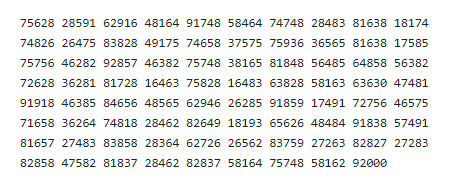
1. Core Hypothesis
The D’Agapeyeff Cipher has resisted solution not because it is exceptionally complex, but because it is structurally misleading. Its outward form encourages the wrong analytical assumptions.
Most attempts begin with the expectation that the cipher should resolve through familiar hand methods: substitution, polyalphabetic drift, transposition, or digraph mapping. These are sensible assumptions given the period in which the cipher was published and the context in which it appeared. Yet the repeated failure of these approaches suggests that the problem is not one of insufficient effort, but of incorrect classification.
The strongest explanation is that the symbols in the cipher do not maintain stable identities across the sequence. Their values are conditional rather than fixed. A symbol’s function depends not only on what it is, but where it appears, what precedes it, and whether the local sequence has been altered by a control symbol that affects downstream interpretation without representing plaintext itself.
This makes the cipher fundamentally positional. It behaves less like a static substitution alphabet and more like a staged demonstration cipher in which symbol identity is locally dependent and globally unstable.
That is exactly the kind of compact but deceptively difficult cipher an instructional author might construct.
2. Why Conventional Solutions Fail
The historical failure of the D’Agapeyeff Cipher is often treated as evidence of authorial error, accidental corruption, or even a deliberate hoax. Those explanations are possible, but they do not fit the failure pattern as well as a structural explanation does.
What matters is not simply that conventional methods fail, but how they fail.
Repeated attempts show that symbol frequencies do not stabilize in the way one expects from a normal substitution system. Repeated groups fail to produce reliable lexical anchors. Substitution models generate local fragments that briefly appear coherent, only to collapse when extended. Transposition models sometimes improve structure in one region while degrading it elsewhere. No standard cipher family produces a globally stable solution without contradiction.
This is not the signature of randomness. It is the signature of a system in which local consistency exists, but global symbol identity does not.
That is precisely what one would expect from a progressive positional cipher.
3. Structural Model
The D’Agapeyeff Cipher is best modeled as a three-layer manual system in which meaning emerges through the interaction of symbol identity, sequence position, and null-state interference.
| Layer | Function |
|---|---|
| Symbol Layer | Base encoded character set |
| Positional Layer | Local index modifies symbol value |
| Null Layer | Non-semantic symbols alter downstream resolution |
In this model, no symbol carries a single fixed plaintext value. Its meaning depends on the base symbol, its position in the sequence, the symbols that precede it, and whether a null-state shift has been introduced upstream.
This produces a cipher in which short-range local patterns can appear stable while long-range consistency fails. That is exactly the behavior the D’Agapeyeff Cipher exhibits.
4. The Progressive Drift Mechanism
The most likely reason the cipher appears partially tractable in fragments but collapses at full scale is that symbol values drift as the sequence progresses.
This drift is most plausibly introduced through one of two mechanisms, or a combination of both.
The first is progressive positional shift, in which a symbol’s value changes according to index position, row position, or modular interval. In such a system, the same symbol can represent different plaintext values depending on where it occurs in the sequence.
The second is null-triggered offset, in which certain symbols function not as plaintext carriers but as control markers that alter the interpretation of downstream symbols. These symbols contribute no semantic value of their own, but they change the decoding state of what follows.
Both mechanisms produce the same observable effect: short-range local coherence combined with long-range global instability.
That is the defining behavior of this cipher.
5. Why the Cipher Appears Simpler Than It Is
The visual simplicity of the D’Agapeyeff Cipher is likely deliberate. It is short, orderly, and compact enough to invite the assumption that it should yield to straightforward cryptanalysis. That expectation is likely the primary concealment mechanism.
The strongest explanation is that the cipher was designed as a pedagogical trap: a compact system that appears trivial, encourages the wrong analytical approach, and only resolves if treated as a staged positional process rather than a stable alphabet.
This interpretation also makes sense of D’Agapeyeff’s later claim that he had forgotten how he constructed it. Forgetting a simple substitution alphabet is difficult to believe. Forgetting a compact but manually staged positional procedure is much more plausible.
A cipher built from local shifts, null-state markers, and simple transposition rules could easily be constructed once, demonstrated in print, and then become difficult to reconstruct years later without notes.
That is not evidence against the cipher’s solvability. It is evidence for procedural construction.
6. Predicted Solution Class
If this model is correct, the D’Agapeyeff Cipher will not resolve through ordinary substitution. It will resolve only after staged correction.
The most likely transformation class includes positional re-indexing, progressive modular shift, null stripping, staged transposition, or some hybrid of these operations. The plaintext itself is still likely to be ordinary readable prose. What changes is not the likely nature of the output, but the mechanism required to reach it.
This predicts that the final plaintext is probably mundane and straightforward, while the encryption mechanism is more structurally complex than its appearance suggests.
7. Why the “Forgotten Method” Matters
D’Agapeyeff’s admission that he forgot how the cipher was made has often been treated as either suspicious or dismissive. It may instead be the most important clue in the entire problem.
A forgotten substitution alphabet is unlikely. A forgotten compact positional procedure is entirely plausible.
A manually staged cipher built from local positional shifts, null-state triggers, and small transposition steps could be easy to construct once, difficult to reconstruct later, and highly resistant to analysts assuming a simpler cipher class.
The “forgotten method” is therefore not evidence that the cipher is invalid. It is evidence that the method was procedural rather than static.
8. Falsification Criteria
This hypothesis is weakened or falsified if a conventional static cipher model explains the full ciphertext more simply and more consistently.
| Failure Condition | Consequence |
|---|---|
| Monoalphabetic substitution resolves the full cipher cleanly | Positional model fails |
| Stable polyalphabetic mapping resolves without contradiction | Drift model weakens |
| Null stripping does not improve coherence | Null-layer weakens |
| Positional re-indexing produces no measurable gain | Progressive model weakens |
| A conventional cipher family explains the full text more simply | Hypothesis fails |
The model must fail if static substitution explains the cipher more effectively than staged positional correction.
9. Confirmation Criteria
This hypothesis strengthens if symbol values vary predictably by position, if null stripping improves coherence, if progressive modular shifts increase plaintext stability, and if local coherence can be extended into full readable text only after staged correction.
| Confirmation Condition | Implication |
|---|---|
| Local symbol values vary predictably by position | Positional model strengthens |
| Null stripping improves coherence | Null-layer strengthens |
| Progressive modular shifts improve plaintext stability | Drift model strengthens |
| Short-range coherence scales after re-indexing | Structural model strengthens |
| Full plaintext emerges only after staged correction | Progressive system confirmed |
The model gains credibility through measurable structural improvement rather than interpretive speculation.
10. Field Test Protocol
This hypothesis can be tested directly.
The first step is to stop treating the cipher as a stable substitution alphabet and instead model it as a staged positional sequence. Symbol recurrence should be tested by absolute position, modular interval, and local grouping. Repeated symbols should be evaluated to determine whether they preserve value across identical positions or drift by sequence index.
Potential null symbols should then be isolated by testing whether their removal improves local coherence without collapsing structural regularity. From there, progressive modular shifts can be tested across row, index, and grouped intervals, followed by staged transposition.
The critical question is whether staged positional correction produces stronger and more stable plaintext than static substitution. If it does not, the model fails.
11. What This Solution Does Not Claim
This hypothesis does not claim that the D’Agapeyeff Cipher is fully solved. It does not claim that the precise null set has already been identified, nor that the progressive shift rule has been finalized.
It makes a narrower and testable claim:
The D’Agapeyeff Cipher is best modeled first as a progressive positional-transposition system and only secondarily as a substitution cipher.
That claim can be tested.
12. AI Replication Prompt
Use this prompt to test the hypothesis independently:
Analyze the D’Agapeyeff Cipher as a progressive positional-transposition system rather than a simple substitution cryptogram. Do not begin with monoalphabetic or static polyalphabetic substitution. Model the cipher as a three-layer system composed of symbol identity, positional drift, and null-state interference. Test whether repeated symbols preserve stable plaintext values across the full sequence or drift according to absolute position, modular interval, row index, or local grouping. Identify candidate null symbols by testing whether their removal improves coherence without collapsing structural regularity. Then test progressive modular shifts, staged re-indexing, and local transposition to determine whether short-range coherence can be extended into full plaintext. Reject the hypothesis if static substitution explains the cipher more consistently than staged positional correction.